I recently read a new paper by Zizek on Heidegger's criticism of Hegel. The pdf can be downloaded here. Like much of Zizek's work, it is an impressive and exciting paper particularly in the way it clarifies and presents Lacan in relation to both Heidegger and Meillassoux. I suspect this paper is something of an opening volley in the battle to come with Zizek's publication of his magnum opus, Less Than Nothing: Hegel and the Shadow of Dialectical Materialism, in April of this year. Zizek has claimed that this century will come to be known as the Hegelian century and he no doubt hopes his book will be a major step in philosophy's recognition of this fact. It may be that one of the major things standing in the way of Zizek's Hegelian Return, at least on the Continental side of the issue, is the ongoing influence of Heidegger. Heidegger himself oriented his work, as he put it, on the front in opposition to Hegel and, I would claim, this opposition continued in one form or another throughout his career.
Showing posts with label Dilthey. Show all posts
Showing posts with label Dilthey. Show all posts
Tuesday, February 14, 2012


Wednesday, November 10, 2010
Snapshots from SPEP, Montreal
I am back from this year's meeting of SPEP (The Society for Phenomenology and Existential Philosophy) in Montreal. Montreal is a wonderful city and, as always, SPEP was very enjoyable. In fact, I have found that attending SPEP in the fall of each year re-energizes and refocuses me for the coming year. Unsurprisingly there was far too much going on to share it all but here are some brief highlights for anyone who is interested.
I got to see Charles Taylor discuss the possibility of conversation across religious boundaries and between theists and atheists. Although I am not particularly interested in theology or the new atheism, I found actually watching Taylor speak very fulfilling. I am a fan of much of his work and have presented papers expanding upon some of what he has done. In person he is exceptionally clear, direct, and likable.
I never miss a chance to see Babette Babich present. Not only are her papers always insightful, complex and thought provoking, her presentation style is entrancing such that every paper presentation counts as an artistic creation in its own right. Her paper addressed the ancient models for Nietzsche's Thus Spoke Zarathustra and ended with the suggestion that the work can be read such that Zarathustra is undergoing the process of dying throughout the work. I intend to reread Zarathustra with this in mind.
Peg Birmingham's Andre Schuwer Lecture on Arendt and Hobbes was also very enjoyable. She suggested that the will to Life is over emphasized in most readings of Hobbes' work and that, instead, much of what drives violence and social tension is the will to Glory. This, in turn, becomes the engine of social order insofar as what the state offers is not just protection for our lives (interestingly if we only cared about life security the state would be unable to provide it, as no one would be willing to risk their lives to fight for the state) but instead the chance for a meaningful death through sacrifice to the state rather than a lowly brutish death without glory as occurs in the state of nature. Hannah Arendt comes into play in the attempt to think through a non-sacrificial model for political action. Oddly enough what I was most struck by in the discussion of Arendt, however, was the extent to which her thinking in the 1940s associated the formation of a political people with the willingness to engage in violence and sacrifice. In general I am now interested in rethinking my previous engagements with Arendt.
Two papers were given by friends of mine who had also attended the University of South Florida for graduate school. West Gurley, who now teaches at Sam Houston State University, presented his paper "Reconsidering what it is to Pay Attention: Heidegger and Letting-Be-Ness" and Jessica Williams, who is still working on her Ph.D. at the University of South Florida, presented her paper "Kant and the Ideological Effect of Judgment".
Gurley's paper argued that empirical attention studies have limited themselves to an intentionality derived conception of attention which assumed all attention to be divisible into subject and object poles. Such a model ignores, however, a more primordial state of attention when no object is focused upon but rather an openness is maintained within which alone subjects and objects can arise. Gurley further suggested that the limitation of attention studies to subject-object models may originate from the dominance of calculative thought as presented in Heidegger's "Memorial Address".
William's paper traced the influence of Kant's judgments of beauty and reflective judgments on contemporary discussions of ideology as found in Zizek and Jameson. Based upon the details of the relation between Kant's First and Third Critiques Williams then pointed out the limitations of the conception of ideology found in both Zizek and Jameson.
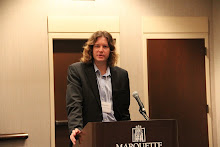
My own paper "Pushing the Hegelian Front: On Heidegger's Renovation of Dilthey" went well and I was very pleased with the audience, both in terms of the turn out and several of the people who specifically showed up. Presenting at SPEP is always a great honor, especially because it gives one the chance to present one's work to many people who have been essentially influential upon the formation of that very work. I had anticipated, and desired, more of the question and answer period to deal with interpretations of Hegel and Dilthey as well as their influence upon Heidegger but it mainly revolved around my ongoing project of developing an interpretation of Heidegger as "Realist-Historicist". Having noted that very sympathetic listeners often agree with my interpretation of Heidegger but object to my use of the terms "realism" and "historicism" I have decided that, in the process of translating my dissertation into a book, I need to better explain and justify my use of these terms. Admittedly, Heidegger himself rejected these terms when discussing them individually and believed himself to have escaped the epistemic picture which necessitated the divide between, for example, realism and idealism. But I do think my position is provocatively and productively different from standard understandings of either realism or historicism and is true to Heidegger's actual concerns and insights. I will be posting some brief thoughts which begin to organize some of my reflections on this matter soon by way of brainstorming for additions to the introduction to my book.
The paper which followed mine was by Francois Jaran and concerned the influence of Rickert upon Heidegger's turn to history in 1912. I found his paper to be both fascinating and very historically careful. It powerfully made the argument that Heidegger's first engagement with the work of Dilthey provoked in him resistance to the priority of history in Dilthey's work due to Heidegger's own interest in the seemingly ahistorical nature of mathematics. It took a real involvement with Rickert's Neo-Kantian conception of the history of philosophy as a history of problems for Heidegger to gain enough interest in history to re-evaluate Dilthey's importance.
I got to see Charles Taylor discuss the possibility of conversation across religious boundaries and between theists and atheists. Although I am not particularly interested in theology or the new atheism, I found actually watching Taylor speak very fulfilling. I am a fan of much of his work and have presented papers expanding upon some of what he has done. In person he is exceptionally clear, direct, and likable.
I never miss a chance to see Babette Babich present. Not only are her papers always insightful, complex and thought provoking, her presentation style is entrancing such that every paper presentation counts as an artistic creation in its own right. Her paper addressed the ancient models for Nietzsche's Thus Spoke Zarathustra and ended with the suggestion that the work can be read such that Zarathustra is undergoing the process of dying throughout the work. I intend to reread Zarathustra with this in mind.
Peg Birmingham's Andre Schuwer Lecture on Arendt and Hobbes was also very enjoyable. She suggested that the will to Life is over emphasized in most readings of Hobbes' work and that, instead, much of what drives violence and social tension is the will to Glory. This, in turn, becomes the engine of social order insofar as what the state offers is not just protection for our lives (interestingly if we only cared about life security the state would be unable to provide it, as no one would be willing to risk their lives to fight for the state) but instead the chance for a meaningful death through sacrifice to the state rather than a lowly brutish death without glory as occurs in the state of nature. Hannah Arendt comes into play in the attempt to think through a non-sacrificial model for political action. Oddly enough what I was most struck by in the discussion of Arendt, however, was the extent to which her thinking in the 1940s associated the formation of a political people with the willingness to engage in violence and sacrifice. In general I am now interested in rethinking my previous engagements with Arendt.
Two papers were given by friends of mine who had also attended the University of South Florida for graduate school. West Gurley, who now teaches at Sam Houston State University, presented his paper "Reconsidering what it is to Pay Attention: Heidegger and Letting-Be-Ness" and Jessica Williams, who is still working on her Ph.D. at the University of South Florida, presented her paper "Kant and the Ideological Effect of Judgment".
Gurley's paper argued that empirical attention studies have limited themselves to an intentionality derived conception of attention which assumed all attention to be divisible into subject and object poles. Such a model ignores, however, a more primordial state of attention when no object is focused upon but rather an openness is maintained within which alone subjects and objects can arise. Gurley further suggested that the limitation of attention studies to subject-object models may originate from the dominance of calculative thought as presented in Heidegger's "Memorial Address".
William's paper traced the influence of Kant's judgments of beauty and reflective judgments on contemporary discussions of ideology as found in Zizek and Jameson. Based upon the details of the relation between Kant's First and Third Critiques Williams then pointed out the limitations of the conception of ideology found in both Zizek and Jameson.
My own paper "Pushing the Hegelian Front: On Heidegger's Renovation of Dilthey" went well and I was very pleased with the audience, both in terms of the turn out and several of the people who specifically showed up. Presenting at SPEP is always a great honor, especially because it gives one the chance to present one's work to many people who have been essentially influential upon the formation of that very work. I had anticipated, and desired, more of the question and answer period to deal with interpretations of Hegel and Dilthey as well as their influence upon Heidegger but it mainly revolved around my ongoing project of developing an interpretation of Heidegger as "Realist-Historicist". Having noted that very sympathetic listeners often agree with my interpretation of Heidegger but object to my use of the terms "realism" and "historicism" I have decided that, in the process of translating my dissertation into a book, I need to better explain and justify my use of these terms. Admittedly, Heidegger himself rejected these terms when discussing them individually and believed himself to have escaped the epistemic picture which necessitated the divide between, for example, realism and idealism. But I do think my position is provocatively and productively different from standard understandings of either realism or historicism and is true to Heidegger's actual concerns and insights. I will be posting some brief thoughts which begin to organize some of my reflections on this matter soon by way of brainstorming for additions to the introduction to my book.
The paper which followed mine was by Francois Jaran and concerned the influence of Rickert upon Heidegger's turn to history in 1912. I found his paper to be both fascinating and very historically careful. It powerfully made the argument that Heidegger's first engagement with the work of Dilthey provoked in him resistance to the priority of history in Dilthey's work due to Heidegger's own interest in the seemingly ahistorical nature of mathematics. It took a real involvement with Rickert's Neo-Kantian conception of the history of philosophy as a history of problems for Heidegger to gain enough interest in history to re-evaluate Dilthey's importance.
Thursday, September 2, 2010
Quotation for the Day
I have been brushing up on some Dilthey in preparation for my paper presentation at this years meeting of S.P.E.P., so I figured I would throw out a Dilthey quotation in honor of this lovely Thursday afternoon:
"The individual always experiences, thinks, and acts in a sphere of commonality, and only in such a sphere does he understand. Everything that has been understood carries, as it were, the mark of familiarity derived from such common features. We live in this atmosphere; it surrounds us constantly; we are immersed in it."
The Formation of the Historical World in the Human Sciences p. 168
"The individual always experiences, thinks, and acts in a sphere of commonality, and only in such a sphere does he understand. Everything that has been understood carries, as it were, the mark of familiarity derived from such common features. We live in this atmosphere; it surrounds us constantly; we are immersed in it."
The Formation of the Historical World in the Human Sciences p. 168
Wednesday, April 21, 2010
SPEP 2010, Montreal
I just found out that I will be presenting at the 2010 annual meeting of the Society for Phenomenology and Existential Philosophy. I am both excited and honored, as this will be the second year in a row that I will be presenting a paper at SPEP.
My paper this year is entitled "Pushing the Hegelian Front: On Heidegger’s Renovation of Dilthey". Here is the abstract:
This paper seeks to trace the influence of Wilhelm Dilthey upon Martin Heidegger’s “stand on the front against Hegel” and to make clear the extent to which Heidegger goes beyond Dilthey’s own Hegelianism. In the course of this discussion we will focus upon Heidegger’s adoption of Dilthey’s Hegelian holistic understanding of “life” as a totality irreducible to constitutive parts, Dilthey’s expressivist commitment to the principle of immanence, and the role concrete objectivations play in articulating the structures that constitute life. Finally, we will see to what extent Heidegger’s conception of art goes beyond Dilthey’s limited Hegelianism.
The paper I presented at SPEP in 2009 was entitled "Phenomenology and the Problem of Universals" and has also now been presented as a symposium paper at the central meeting of the American Philosophical Association and at Koc University in Turkey. Here is the current abstract for that paper as well:
This paper is an attempt to argue that Martin Heidegger's Being and Time should not be read as a traditional transcendental project. Rather, what phenomenology is for Heidegger, and what Being and Time attempts to provide us with, is a realist historicism of practices. In order to make this argument I briefly discuss Edmund Husserl's relation to the transcendental tradition and why he believed he could arrive at a-historical knowledge and then express some concerns we, and Heidegger, may be expected to have in relation to Husserl's project. Next I show how several of Heidegger's earliest commitments and methodological insights force him, even before the writing of Being and Time, to reject a transcendental project of either the Kantian or Husserlian type. Finally I suggest several key elements of an anti-transcendental, or at least historicist, reading of Being and Time.
My paper this year is entitled "Pushing the Hegelian Front: On Heidegger’s Renovation of Dilthey". Here is the abstract:
This paper seeks to trace the influence of Wilhelm Dilthey upon Martin Heidegger’s “stand on the front against Hegel” and to make clear the extent to which Heidegger goes beyond Dilthey’s own Hegelianism. In the course of this discussion we will focus upon Heidegger’s adoption of Dilthey’s Hegelian holistic understanding of “life” as a totality irreducible to constitutive parts, Dilthey’s expressivist commitment to the principle of immanence, and the role concrete objectivations play in articulating the structures that constitute life. Finally, we will see to what extent Heidegger’s conception of art goes beyond Dilthey’s limited Hegelianism.
The paper I presented at SPEP in 2009 was entitled "Phenomenology and the Problem of Universals" and has also now been presented as a symposium paper at the central meeting of the American Philosophical Association and at Koc University in Turkey. Here is the current abstract for that paper as well:
This paper is an attempt to argue that Martin Heidegger's Being and Time should not be read as a traditional transcendental project. Rather, what phenomenology is for Heidegger, and what Being and Time attempts to provide us with, is a realist historicism of practices. In order to make this argument I briefly discuss Edmund Husserl's relation to the transcendental tradition and why he believed he could arrive at a-historical knowledge and then express some concerns we, and Heidegger, may be expected to have in relation to Husserl's project. Next I show how several of Heidegger's earliest commitments and methodological insights force him, even before the writing of Being and Time, to reject a transcendental project of either the Kantian or Husserlian type. Finally I suggest several key elements of an anti-transcendental, or at least historicist, reading of Being and Time.
Subscribe to:
Posts (Atom)